
In today's dynamic business landscape, disputes are an inevitable part of operations. However, the traditional image of protracted courtroom battles, escalating costs, and public scrutiny no longer aligns with the strategic objectives of forward-thinking businesses. At Valiant Law, we understand that true leadership in the legal field means offering not just solutions, but strategic advantages. This is precisely why we champion Alternative Dispute Resolution (ADR) - a sophisticated and cost-effective approach that moves beyond the courtroom to deliver efficient and tailored outcomes for commercial, corporate, and real estate disputes in the Greater Toronto Area (GTA).
ADR encompasses a range of techniques designed to resolve conflicts outside of litigation, with the two most prevalent being Mediation and Arbitration. While both aim to achieve a resolution without judicial intervention, they differ significantly in their process and outcomes.
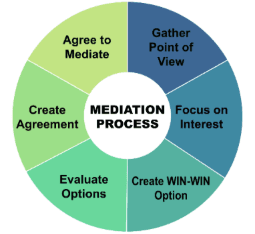
Mediation is a voluntary process where a neutral third party, the mediator, facilitates communication and negotiation between disputing parties. The mediator does not impose a decision but helps the parties explore their interests, identify common ground, and ultimately reach a mutually agreeable settlement. This process is highly confidential, flexible, and preserves business relationships, making it ideal for situations where ongoing collaboration or reputation is paramount. Imagine a commercial landlord and tenant disagreeing on lease terms; mediation allows them to openly discuss their needs and find a compromise that keeps their business relationship intact.
Arbitration, on the other hand, is a more formal process where disputing parties present their cases to a neutral third party, the arbitrator (or a panel of arbitrators), who then makes a binding decision. While less formal than court proceedings, arbitration shares some similarities, including the presentation of evidence and legal arguments. However, it is typically faster, more cost-effective, and private compared to litigation. For instance, in a complex corporate dispute over a breach of contract, arbitration can provide a swift and definitive resolution without the public spectacle and extensive discovery inherent in court.
The strategic advantages of embracing ADR, particularly for commercial, corporate, and real estate disputes in the GTA, are compelling:
- Cost-Effectiveness: Litigation involves substantial legal fees, court costs, and the often-overlooked expense of lost productivity. ADR methods drastically reduce these financial burdens.
- Time Efficiency: Court dockets are often backlogged, leading to lengthy delays. ADR processes can be scheduled and completed far more quickly, allowing businesses to resolve disputes and refocus on their core operations.
- Confidentiality: ADR protects sensitive business information and reputations from public exposure, a critical factor for competitive firms.
- Greater Control and Flexibility: Parties have a greater say in selecting the decision-maker (arbitrator/mediator) and can tailor the process to their specific needs, allowing for creative, business-focused solutions.
At Valiant Law LLP, our team acts as adept navigators in the ADR landscape. Whether serving as neutral mediators to guide parties towards common ground, or as skilled advocates representing your interests in arbitration, our expertise ensures that your business achieves the most favorable and strategic outcome. We believe that choosing ADR is not just avoiding the courtroom; it's choosing a smarter, more strategic path to resolution, solidifying your position as an industry leader.
Strategic Resolution for the Core Economy: ADR for SMEs and Private Clients
While multi-billion-dollar cases make headlines, the true economic and emotional value of Alternative Dispute Resolution (ADR) is most pronounced for Small to Medium Enterprises (SMEs) and private clients navigating commercial, real estate, and partnership disputes. For these groups, the benefits of speed, cost control, and confidentiality are not just strategic advantages—they are often essential for survival.
At Valiant Law, we specialize in adapting the power of Mediation and Arbitration to the scale of our private and entrepreneurial clients, ensuring they avoid the financial drain and public exposure of full-scale litigation.
- Mediation: Preserving Capital and Relationships
- Huma v. Mississauga Hospital (Ontario Court of Appeal): The Court of Appeal's ruling confirmed the courts' "undoubted discretion" to enforce negotiated settlement agreements (often resulting from mediation) unless they are unconscionable. This provides a crucial assurance to small businesses: a mediated agreement, once signed, is a binding, enforceable contract, offering finality without the public risk of a trial.
- Arbitration: Definitive Resolution with Expert Efficiency
- ADR Chambers Expedited Arbitration Rules (Private Sector Example): While not a court case, the widespread use of institutional rules for Expedited Arbitration in Canada shows a market-driven benefit for SMEs. These fixed-fee, fixed-time (often under three months) processes drastically reduce the uncertainty of legal fees, a financial lifeline for a small business compared to open-ended litigation costs.
For an SME or a private client, the main goal is a rapid resolution that prevents the dispute from consuming business time or personal finances. Mediation is overwhelmingly favored because it offers control over the outcome and safeguards confidential information.
| Area of Law | Example / Context | Demonstrated ADR Benefit (Mediation) |
|---|---|---|
| Commercial Leasing (SME) | A local restaurant owner and a commercial landlord dispute rent payments and necessary repairs after a pipe burst. | Cost & Relationship Preservation: A formal mediation allows the parties to agree on a flexible payment plan and a shared maintenance schedule, a solution a court could not easily mandate. The business stays open, and the long-term lease remains viable, protecting the SME's livelihood and the landlord's asset value. |
| Real Estate (Private Client) | A buyer refuses to close on a GTA home purchase, citing a minor defect, while the seller demands the forfeited deposit. | Speed & Confidentiality: Mediation can be scheduled within weeks, compared to months or years for a court date. The private nature of the negotiation prevents public exposure of the property's price and the buyer's financial issues, saving both parties time and minimizing market disruption. |
| Partnership/Shareholder Disputes (SME) | Two equal partners in a tech startup disagree on future direction and valuation for a buyout. | Creative Solutions: A mediator helps the partners move beyond emotional demands to find a solution, perhaps involving a staged buyout tied to future performance metrics, a nuanced business solution impossible to achieve via a rigid court order. |
Supporting Case Law (Enforcement of Settlement):
When a binding decision is necessary—especially when the issue is complex or highly technical—arbitration provides a definitive answer faster and with greater privacy than court.
| Area of Law | Example / Context | Demonstrated ADR Benefit (Arbitration) |
|---|---|---|
| Construction (SME) | A homeowner and a small general contractor dispute the quality and cost of custom renovations, involving complex engineering or materials standards. | Expert Decision-Maker: The parties select an arbitrator who is a qualified structural engineer or construction lawyer. This specialized expertise leads to a faster, more informed technical decision than relying on a generalist judge, saving the contractor significant time and reputational risk. |
| Commercial Contract (SME) | A small Canadian distributor and an international manufacturer (e.g., in the US) have a disagreement over product exclusivity under a distribution agreement. | Global Enforceability & Neutrality: They use an arbitration clause specifying a neutral city (e.g., Toronto) and an expert arbitrator. The resulting award is internationally enforceable under the New York Convention, avoiding years of costly, complex litigation in two different countries. |
Supporting Case Law (Cost-Saving Procedure):
Strategic Resolution for the Core Economy: ADR for SMEs and Private Clients
While multi-billion-dollar cases make headlines, the true economic and emotional value of Alternative Dispute Resolution (ADR) is most pronounced for Small to Medium Enterprises (SMEs) and private clients navigating commercial, real estate, and partnership disputes. For these groups, the benefits of speed, cost control, and confidentiality are not just strategic advantages—they are often essential for survival.
At Valiant Law, we specialize in adapting the power of Mediation and Arbitration to the scale of our private and entrepreneurial clients, ensuring they avoid the financial drain and public exposure of full-scale litigation.
Resources:
https://ccac-adr.org/en/why-choose-arbitrationhttps://www.canadianlawyermag.com/practice-areas/adr/new-report-shows-how-arbitration-in-canada-is-increasing-as-a-means-of-dispute-resolution/386633https://www.cba.org/sections/dispute-resolution/resources/retaining-and-improving-investor-state-arbitration-amidst-calls-for-reform/A well-drafted Alternative Dispute Resolution (ADR) clause is the cornerstone of a strategic commercial contract. It preemptively guides any future dispute away from the expensive and unpredictable courtroom toward a structured, confidential, and cost-effective resolution.
We recommend a tiered ADR clause that mandates negotiation first, then mediation, before resorting to binding arbitration (or, as a last resort, litigation). This ensures clients benefit from the relationship-preserving aspects of negotiation/mediation while retaining the finality of arbitration.
Tiered Dispute Resolution Clause Sample
All disputes, claims, or controversies arising out of or relating to this Agreement, or the breach, termination, enforcement, interpretation, or validity thereof, shall be resolved exclusively in accordance with the following tiered procedure:
- Initial Negotiation (Tier 1)
- Mandatory Mediation (Tier 2)
- 2.1 Selection of Mediator: The parties shall jointly select a neutral, third-party mediator from a recognized ADR institution (e.g., ADR Chambers or a similar GTA-based service). If the parties cannot agree on a mediator within fifteen (15) days of initiating mediation, the selection shall be made by the agreed-upon ADR institution.
- 2.2 Location and Costs: Mediation shall take place in Toronto, Ontario. The costs of the mediator and administrative fees shall be shared equally by the parties. Each party shall bear its own legal fees and expenses.
- 2.3 Confidentiality: The mediation process and all communications made during mediation shall be confidential and inadmissible in any subsequent arbitration or judicial proceeding, except as required by law.
- Binding Arbitration (Tier 3)
- 3.1 Governing Rules: The arbitration shall be conducted by a single arbitrator (or three arbitrators, depending on the dispute value) in accordance with the [Insert Specific Rules, e.g., ADR Chambers Rules for Domestic Commercial Arbitration].
- 3.2 Location and Language: The place of arbitration shall be Toronto, Ontario, and the language of the arbitration shall be English.
- 3.3 Finality: The arbitration award shall be final and binding upon the parties and may be entered as a judgment in any court of competent jurisdiction. The parties hereby waive any right to appeal the arbitration award, to the extent that such waiver may be lawfully made.
The parties shall first attempt to resolve the dispute through direct, good faith negotiations. Either party may initiate this process by providing written notice to the other party detailing the nature of the dispute. Within fifteen (15) business days of such notice, senior representatives from both parties, with the authority to settle the dispute, shall meet (in person or via video conference) to attempt resolution.
If the dispute remains unresolved thirty (30) days after the initial written notice under Tier 1, the parties agree to enter into mandatory non-binding mediation.
If the dispute is not resolved through mediation within sixty (60) days of the appointment of the mediator, the parties agree that the sole and exclusive remedy shall be final and binding arbitration under the rules of the selected ADR institution.
Strategic Rationale for This Clause
- Maximum Efficiency: By mandating negotiation first, you create a zero-cost option to resolve low-level conflicts quickly.
- Mandatory Mediation: This ensures a cooling-off period and expert involvement (the mediator), often resolving disputes that seemed impossible to settle privately, protecting relationships.
- Controlled Finality: Resorting to binding arbitration ensures that if mediation fails, the matter still bypasses the public court system, maintaining confidentiality and allowing for the selection of an expert decision-maker.
- Clear Jurisdiction: Specifying Toronto as the location is crucial for GTA businesses, reducing venue disputes and travel costs.
Examples Contextualizing ADR
These examples, often depicted in media, illustrate the core concepts of Mediation and Arbitration in resolving high-stakes disputes:
- Commercial Mediation (Dispute Resolution):
- Example: A major studio and a lead actor use mediation to resolve a salary or contract dispute privately, avoiding a lawsuit that could damage the film's publicity (illustrating confidentiality and relationship preservation).
- Corporate Arbitration (Contract Disputes):
- Example: Two tech giants submit a complex intellectual property dispute to a panel of expert arbitrators, bypassing the public court system to get a swift, specialized, and binding decision (illustrating specialized knowledge and speed).
- Real Estate Mediation (Development Disputes):
- Example: A developer and a municipal body use a neutral third party to mediate disagreements over zoning or land use, finding a compromise that allows the project to proceed without years of legal limbo (illustrating flexibility and time savings).